
Linda McCall, Faith Scott Jessup, Damián Suárez
Opening Reception: Saturday, December 6, 5 – 8 PM
December 6 – January 10
Linda McCall — Rituals and Private Moments


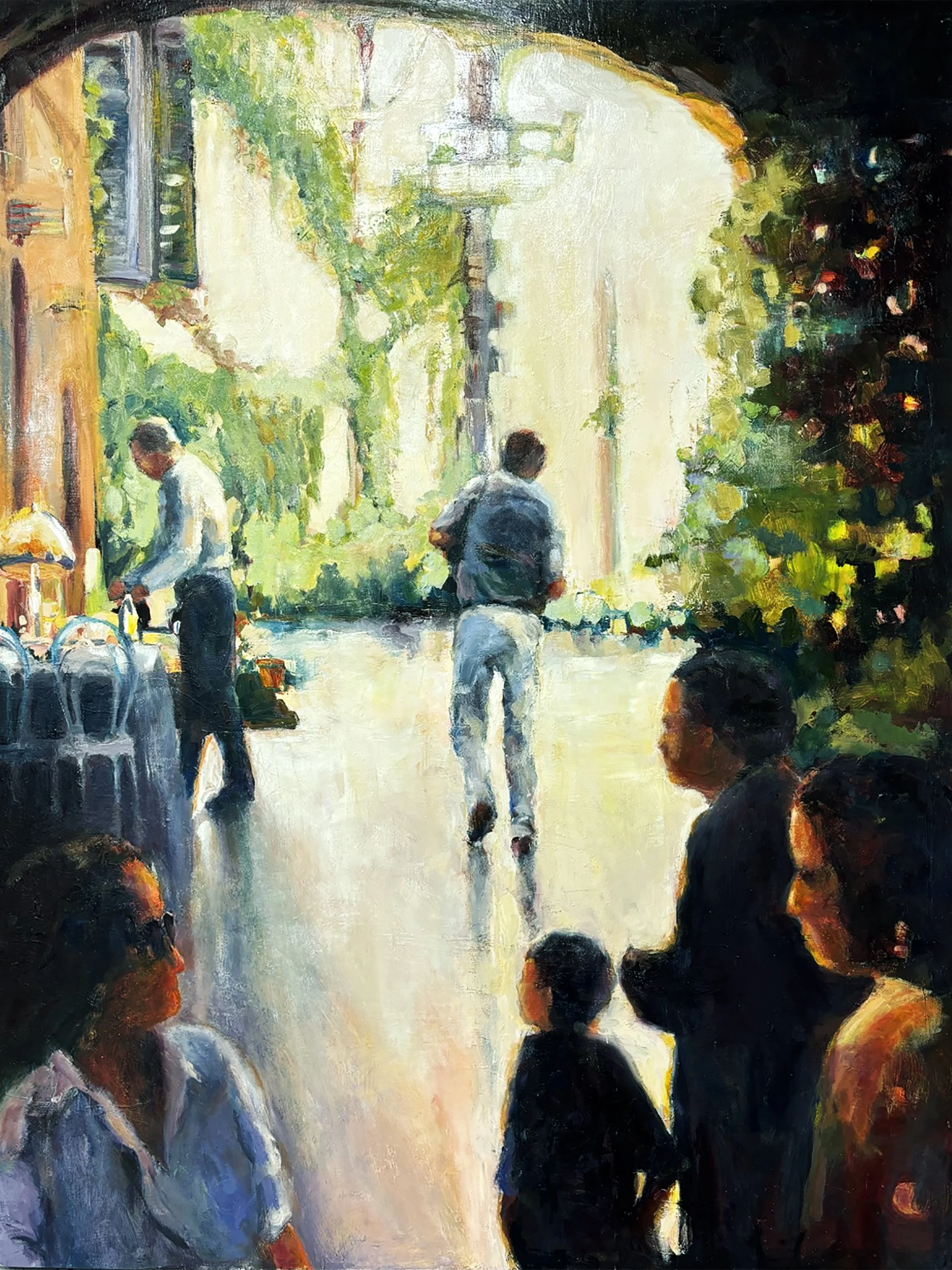

In the 21st century we are inseparable from information. The continual flow of data in and around our lives has become seamless with our perception it. This is especially apparent with respect to our understanding of history. Technology renders history as something endlessly in flux, a mutable concept. Categories such as “past” or “history” are subject to investigation, reinterpretation, splicing, editing, and re-framing. Through these reiterations, various distortions and interferences of information are bound to occur, whether intended or not.
I feel it’s appropriate to use an 'old' process, such as painting, to address the current processes and technologies that are used to record our world. Systems employing artificial intelligence, digital imaging, scans, photocopies, and every other form of gathered data are only a small part of a much larger strata of visual surveillance that is employed in shaping ourselves and the world around us.
My works displace images from the past into the present. I wish to accentuate those distortions and changes, brought about by time and changing technologies. I try to reconstruct various historical works where some information has been duplicated, altered, or is missing altogether. It is not my intention to merely replicate the works from the past, but to alter these historical references to show history being transformed into a kind of abstract data; a painted image where neither the past nor the present exists without the interference of the other.
Faith Scott Jessup — Duets
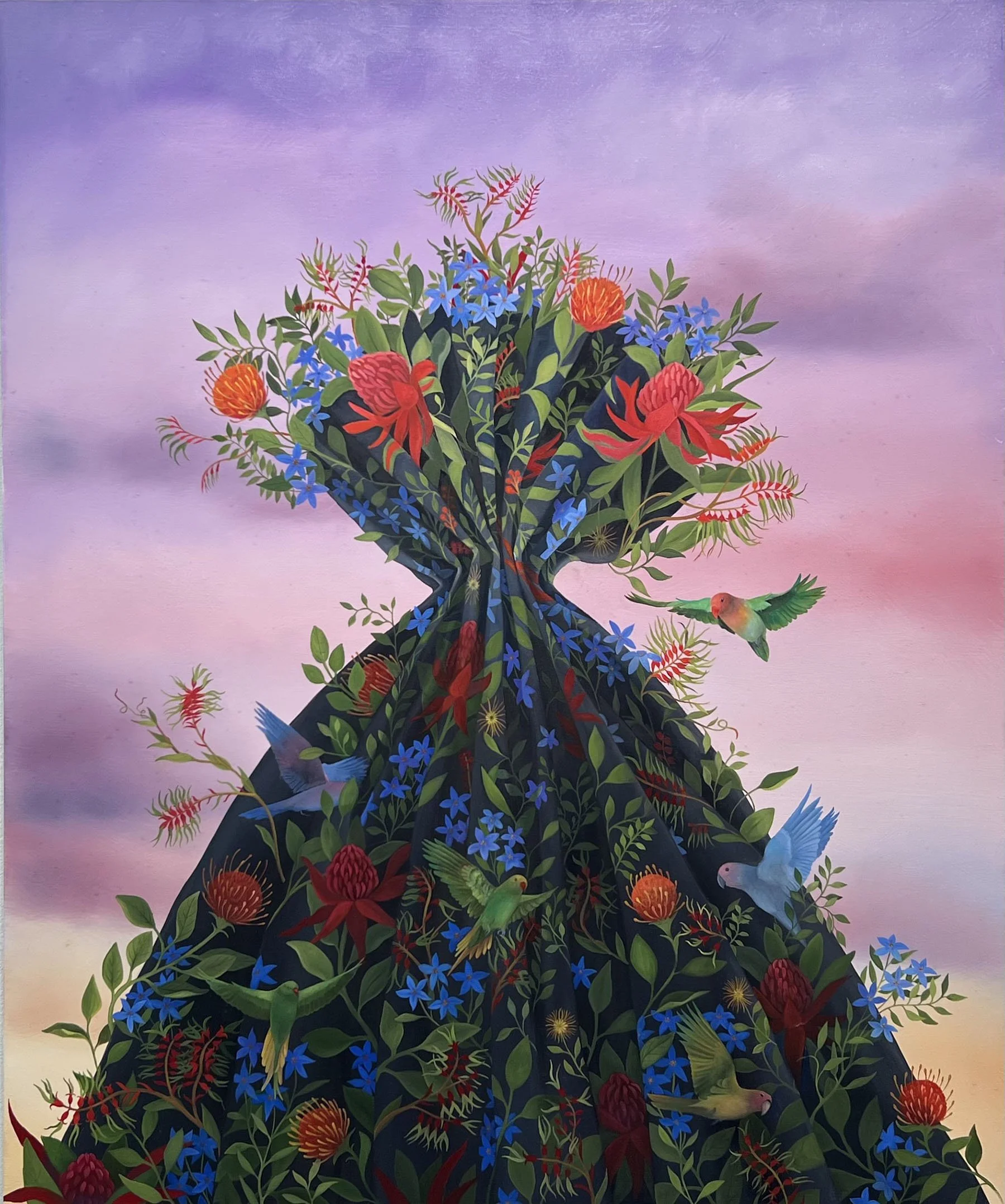
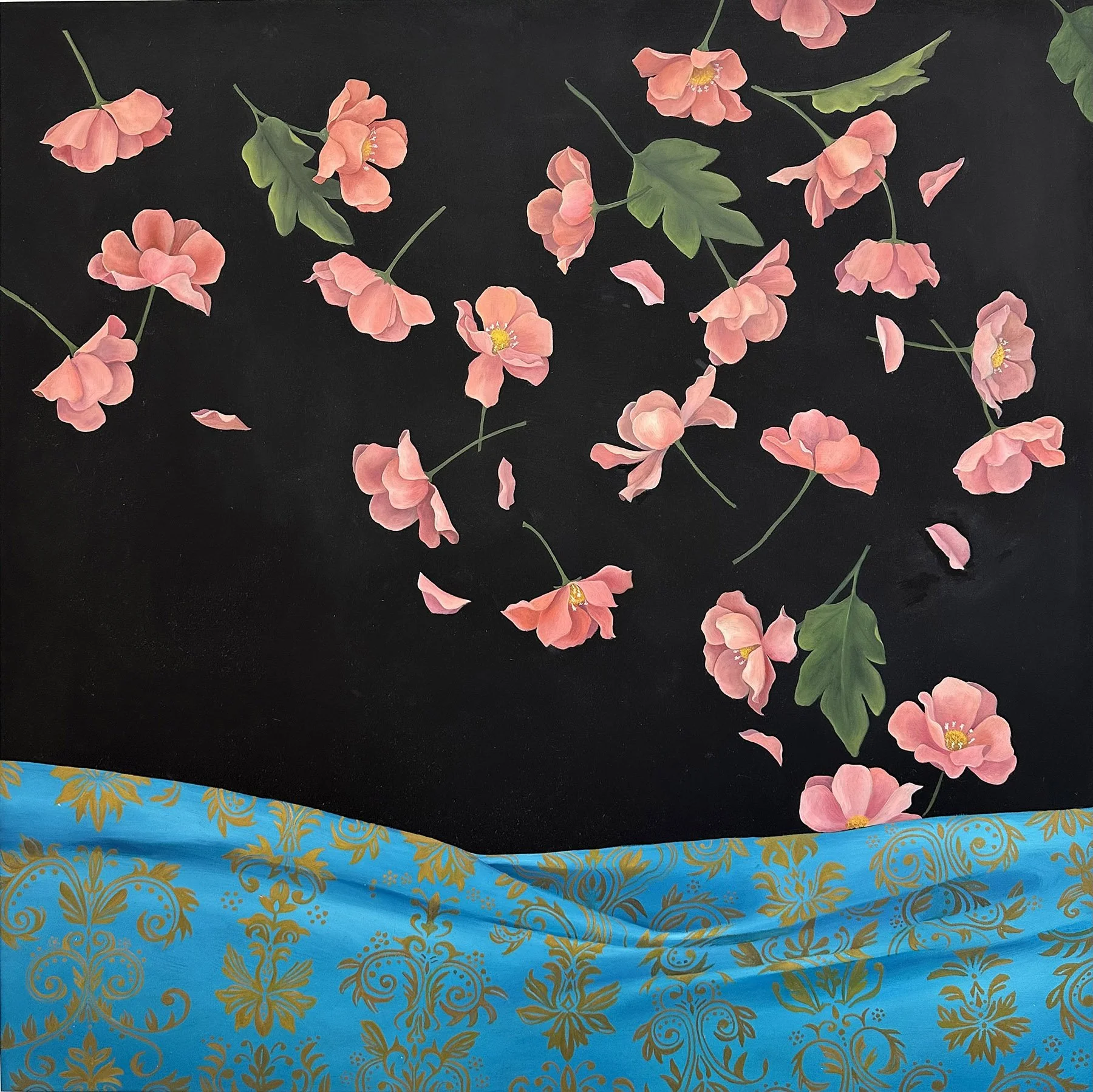
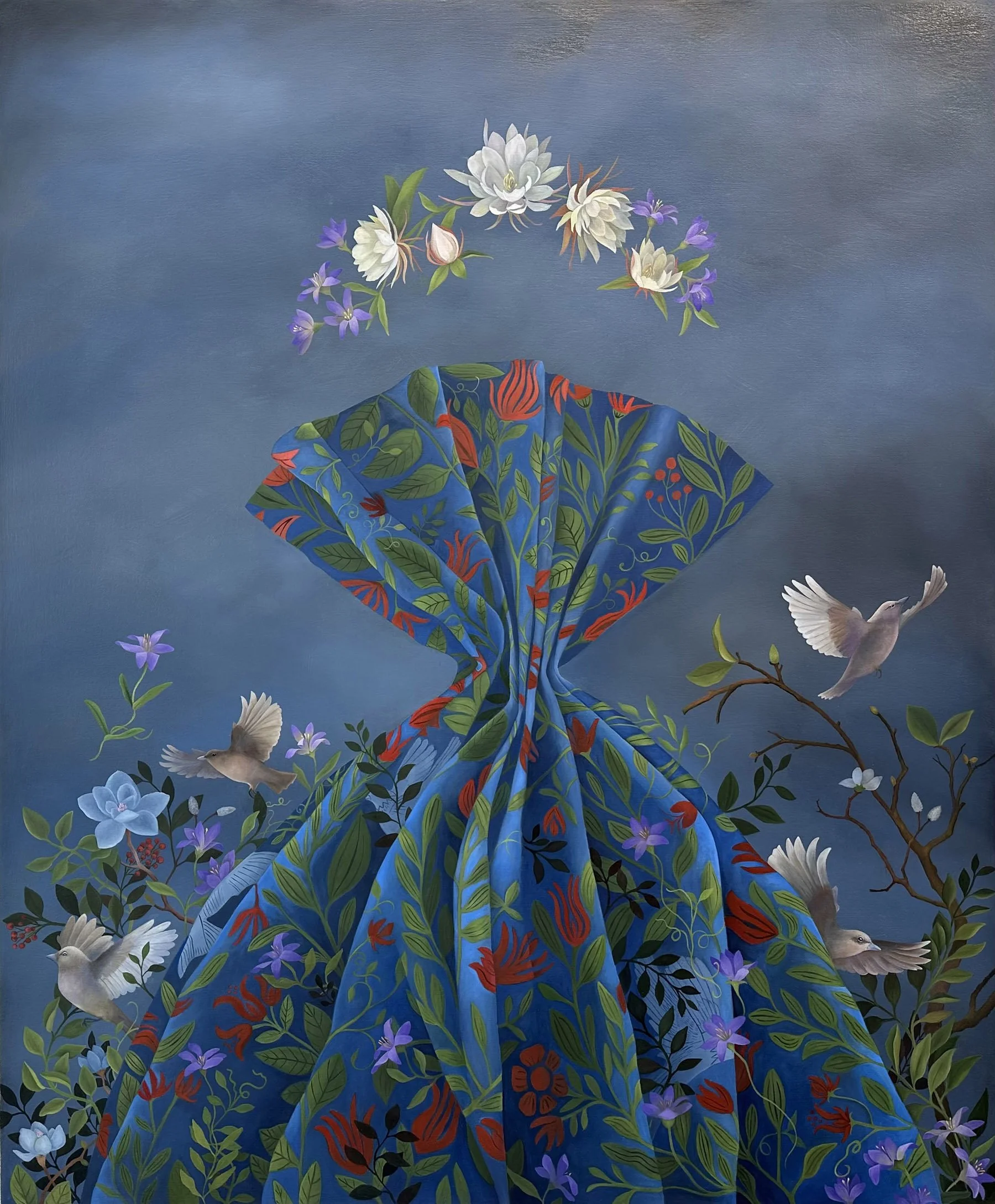
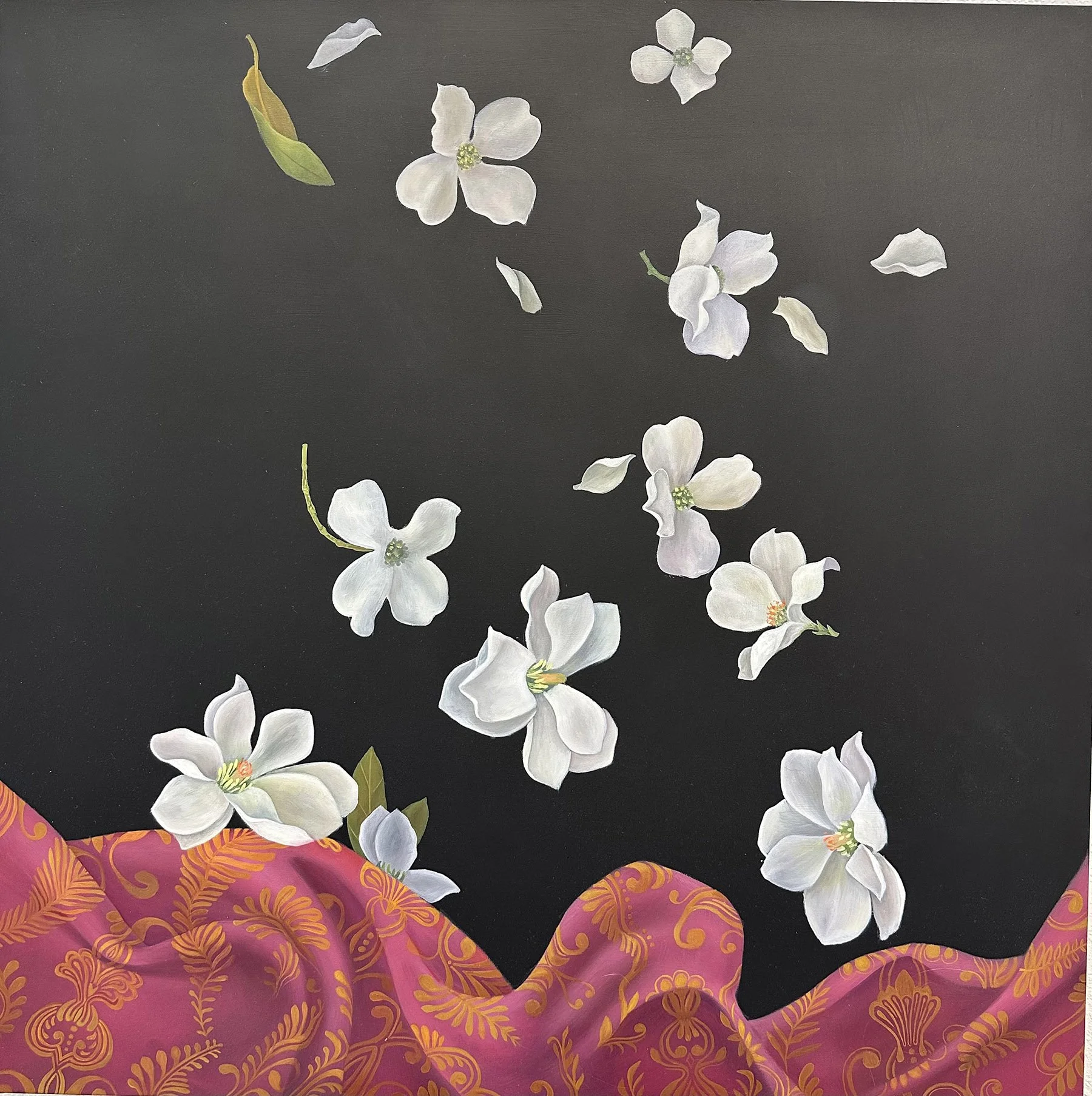
My paintings are a blend of invention and description. The challenge I set for myself is to find the balance, the sweet spot between naturalism and convincing invention while remaining true to my descriptive language.
This interest in the natural world and a world of my own creation has been a unifying theme in my work for many years. I have returned again and again to paint natural objects such as stones, leaves, feathers, and twigs, which sometimes float with an improbable weightlessness against invented skies. In the last few years, I have been enamored with colorful, patterned swatches of cloth, and in some of these paintings, the fabric forms itself into imaginary waves or goddess-like totemic figures. In this body of work, the images have naturally formed themselves into pairs, one responding to the other and becoming duets.
I imagine the natural world existing apart from our human preoccupations, arranging and rearranging itself, rising, falling, defying gravity at will. I find solace in the constancy of natural life forces that will endure, adapt, and change despite our self-inflicted wounds. For myself, it’s about balance: to keep one’s eye on the magic unfolding in the peeling bark of a tree or a glistening stone on a seashore, while looking heavenward at Camus’ “benign indifference of the universe.” And so, as always, I remind myself to pick up my brush and be quiet. Listen, touch, pay attention.
Damián Suárez — Kinetic Landscape
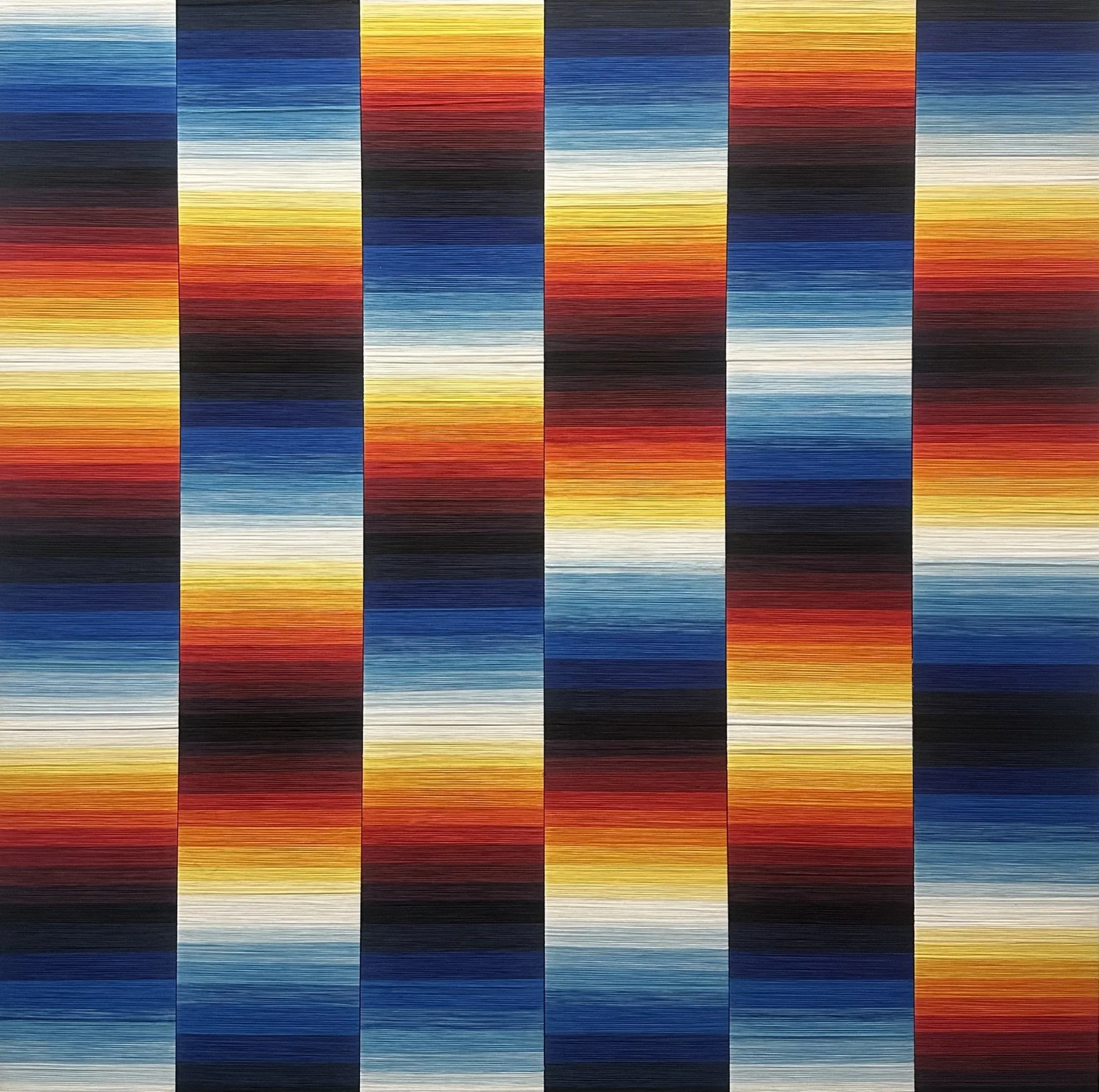
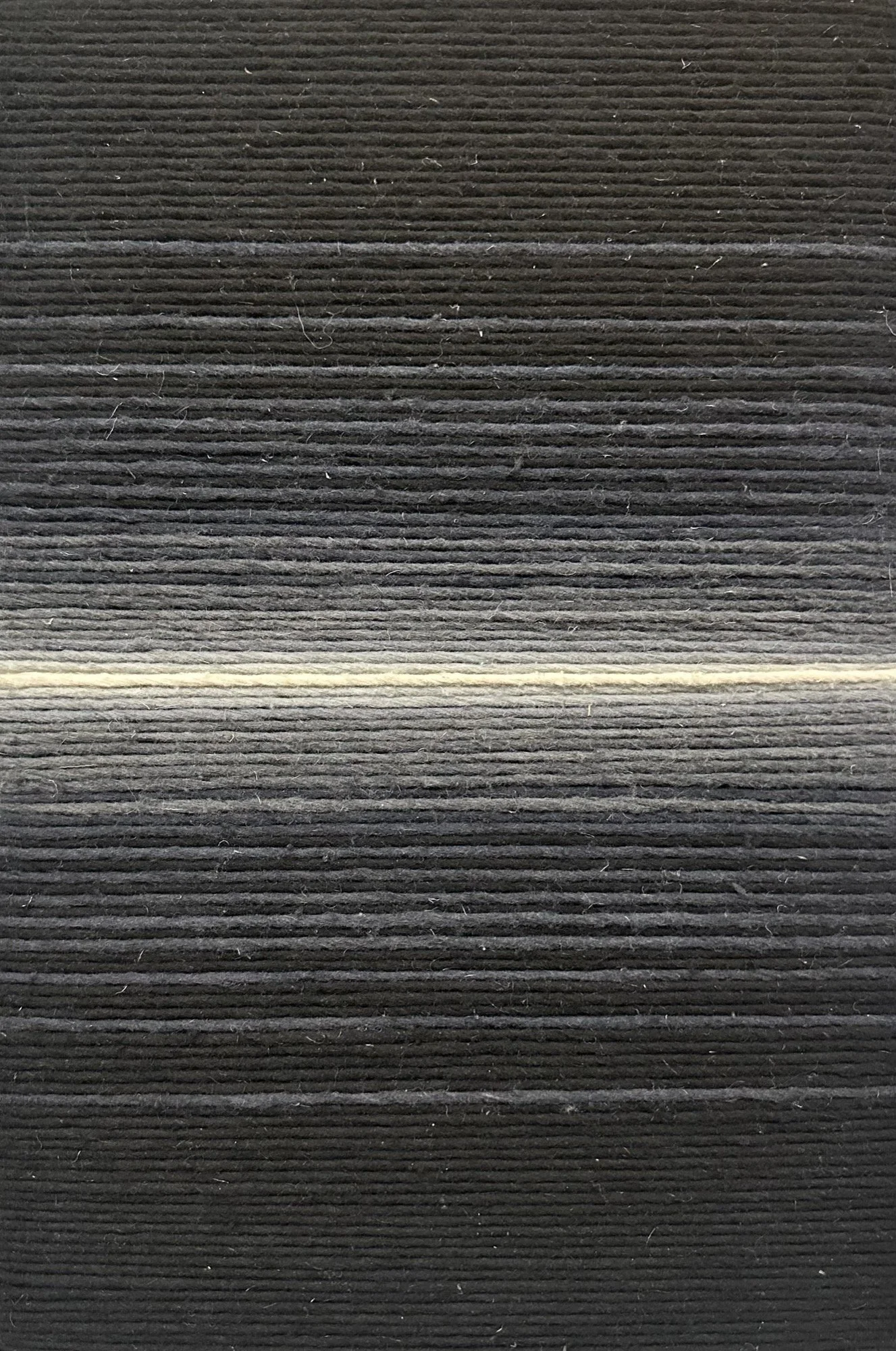
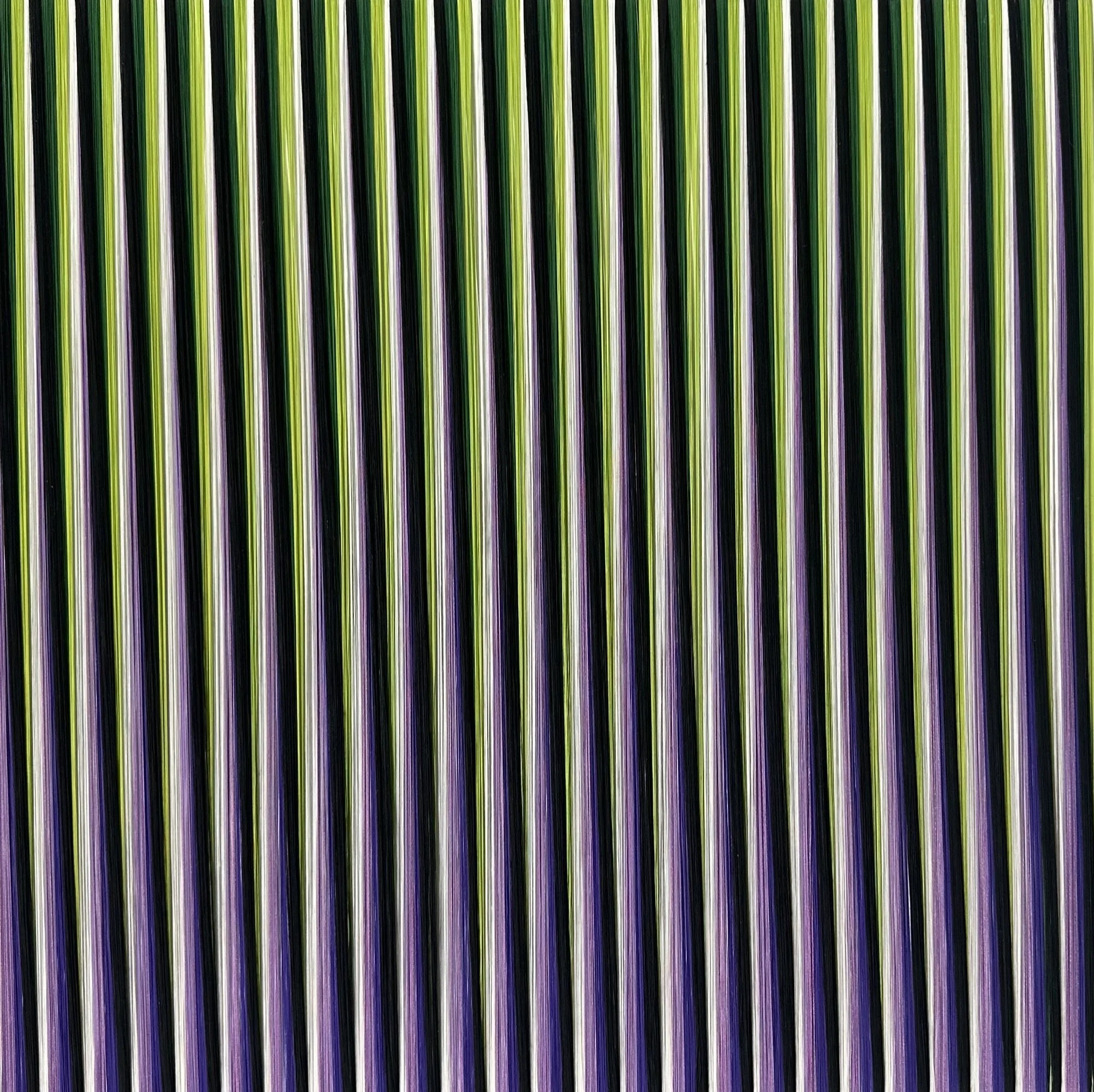
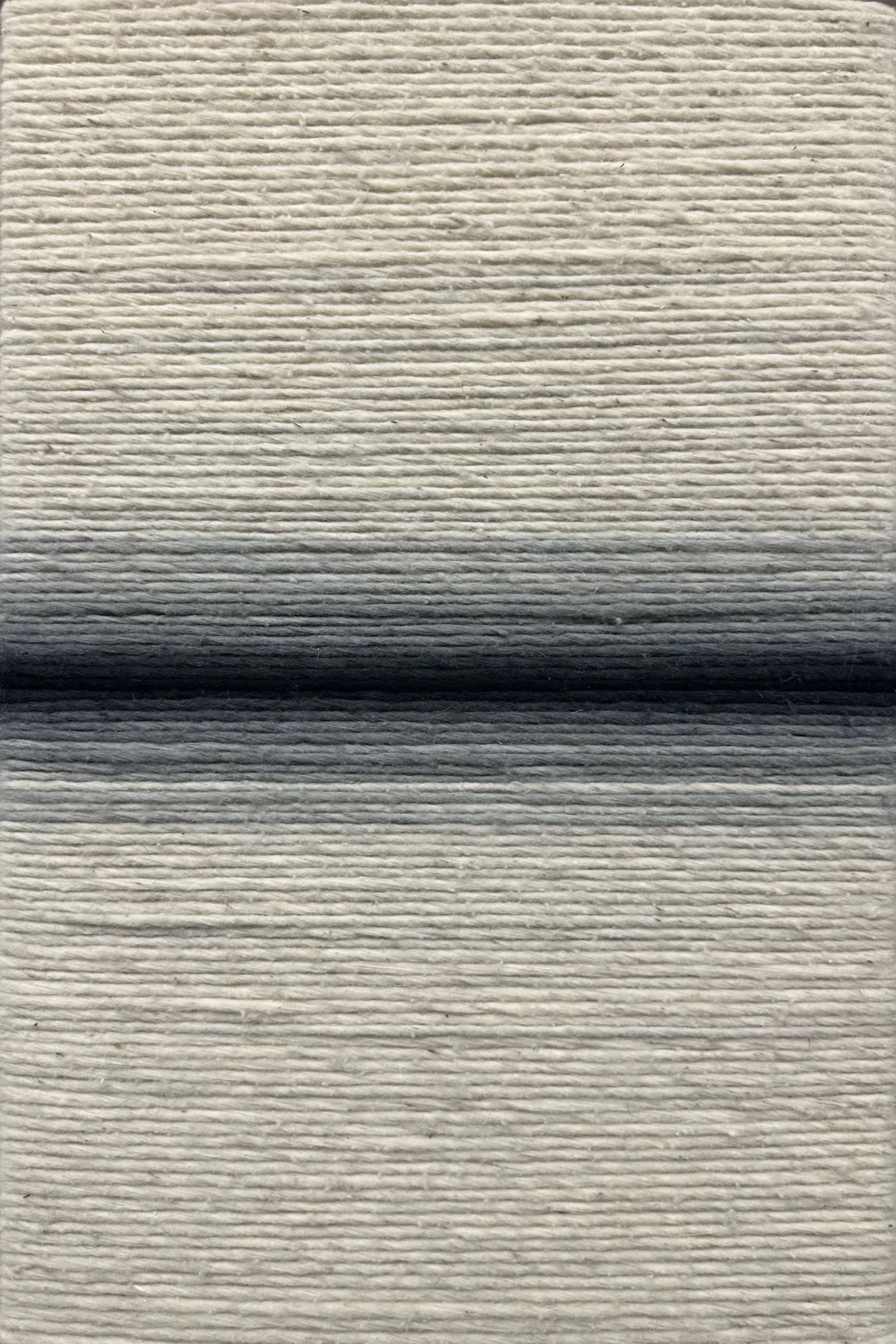
This new body of work grows out of two years of research into Venezuelan modernism and the broader cultural shifts shaping my home country. I rethink the visual systems of the Venezuelan kinetic tradition—grids, color modules, and optical structures shaped by artists like Jesús Soto, Carlos Cruz-Diez, and Gego—not as something to replicate, but as something to question, break apart, and rebuild.
My process brings this modernist vocabulary into conversation with Indigenous visual knowledge, particularly the weaving practices of the Ye’kuana. Their rhythms and geometric structures echo the movement and perception central to kinetic art, yet arise from a distinct cultural logic. Working with thread on wood, I use tension, repetition, and tactility to create compositions shaped as much by craft and constraint as by precision.
The resulting works are modular, responsive to their environment, and meant to activate the viewer’s physical attention. By combining rationalist systems with ancestral knowledge and material labor, I aim to expand the boundaries of the kinetic legacy—and explore how visual traditions transform when filtered through experience, displacement, and time.